Making one kilo releases about 0.1 kg of CO₂: substrate and membrane; the plants take carbon back.
01The building that proves it
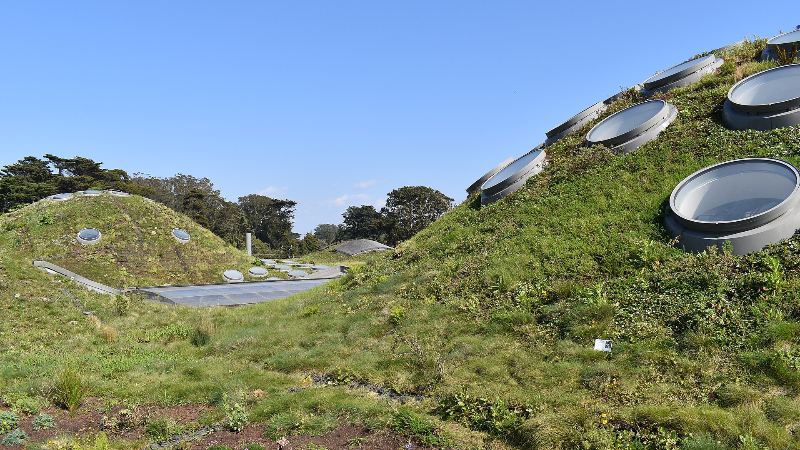
Living Roof Substrate here: a 2.5-acre living roof of native plants.
About the building ↗02Try it on a board
Pick up to three materials to sit beside living roof substrate. The board shows the styles that use all of them, and writes a prompt you can take to an image or video generator.
03The styles built on it
04Up close
- Extensive (sedum)thin, light, low maintenance
- Intensivedeep soil, lawns, trees, a real garden
- Biodiverse (brown) roofrubble and seed left to colonise
Waterproofing, root barrier, drainage layer, filter, growing medium and plants, in that order, on a structure sized for the wet weight.
Changes with the seasons and the years; sedum reddens in drought, meadows shift species, and the membrane beneath is what must last.
A roof you would rather look at from above, with drains and inspection strips at the edges.
05Questions
Which design styles use living roof substrate?
Biophilic Design, Sustainable Architecture and Organic Architecture.
What goes well with living roof substrate?
Living Roof Substrate pairs well with clt (cross-laminated timber), rammed earth and structural steel.
What does living roof substrate communicate?
Ecological integration, Biodiversity ambition and Climate resilience. It suits sustainable architecture, urban ecology projects and stormwater-conscious builds.
What kinds of living roof substrate are there?
Extensive (sedum), Intensive and Biodiverse (brown) roof. Extensive (sedum): thin, light, low maintenance.
How does living roof substrate age?
Changes with the seasons and the years; sedum reddens in drought, meadows shift species, and the membrane beneath is what must last.
How can you tell real living roof substrate?
A roof you would rather look at from above, with drains and inspection strips at the edges.
What is the carbon footprint of living roof substrate?
Making one kilo of living roof substrate releases about 0.1 kg of CO₂, cradle to gate: substrate and membrane; the plants take carbon back.