Making one kilo releases about 6 kg of CO₂: PTFE or PVC-coated polyester, used very thinly.
01The building that proves it
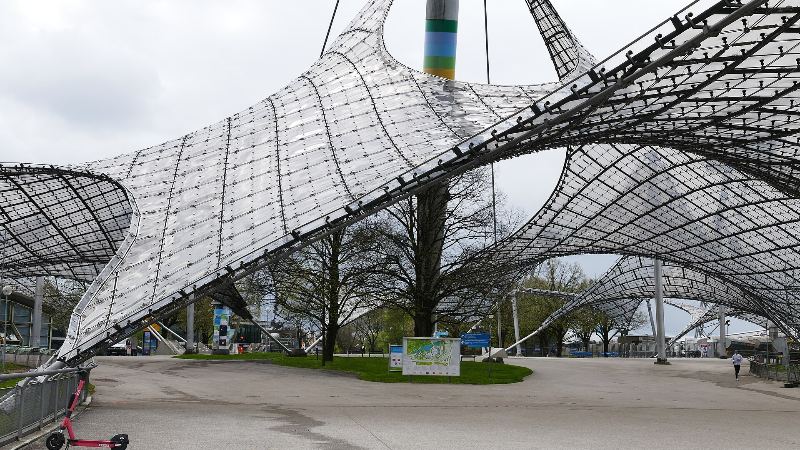
Tensile Fabric here: acrylic-glass tensile canopies over the Olympic park.
About the building ↗02Try it on a board
Pick up to three materials to sit beside tensile fabric. The board shows the styles that use all of them, and writes a prompt you can take to an image or video generator.
03The styles built on it
04Up close
- PTFE-coated glasspermanent, the Denver airport and Millennium Dome fabric
- PVC-coated polyestercheaper, shorter life
- ETFE foilsee its own entry
Patterned flat, welded into a doubly-curved shape, and stretched between masts and cables until it holds its form by tension alone.
PTFE self-cleans and lasts 30 years plus; PVC yellows and greys within a decade.
Saddle curves everywhere, a soft glow of daylight through it, and cables doing all the work.
05Questions
Which design styles use tensile fabric?
Architectural Futurism, High-Tech Architecture and Neo-Futurism.
What goes well with tensile fabric?
Tensile Fabric pairs well with etfe membrane, structural steel and carbon fibre composite.
What does tensile fabric communicate?
Structural lightness, Festive spectacle and High-tech engineering. It suits stadiums, festival architecture and large-span canopies.
What kinds of tensile fabric are there?
PTFE-coated glass, PVC-coated polyester and ETFE foil. PTFE-coated glass: permanent, the Denver airport and Millennium Dome fabric.
How does tensile fabric age?
PTFE self-cleans and lasts 30 years plus; PVC yellows and greys within a decade.
How can you tell real tensile fabric?
Saddle curves everywhere, a soft glow of daylight through it, and cables doing all the work.
What is the carbon footprint of tensile fabric?
Making one kilo of tensile fabric releases about 6 kg of CO₂, cradle to gate: PTFE or PVC-coated polyester, used very thinly.