Making one kilo releases about 0.8 kg of CO₂: twice fired, once for the body and once for the glaze.
01The building that proves it
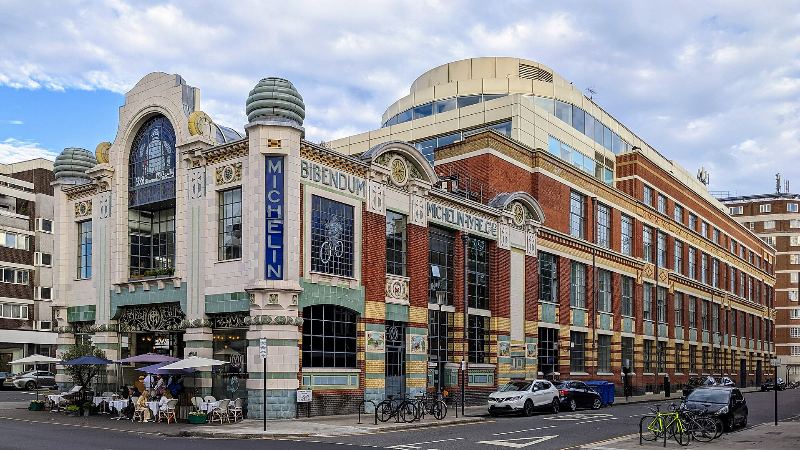
Glazed Faïence here: glazed faience tiles and pictorial panels of racing cars.
About the building ↗02Try it on a board
Pick up to three materials to sit beside glazed faïence. The board shows the styles that use all of them, and writes a prompt you can take to an image or video generator.
03The styles built on it
- Bronze Age"Obsidian, flint, carnelian, lapis lazuli and faience beads"
- Architectural Expressionism"Glazed ceramic tile and faience on facades and interiors"
04Up close
- Architectural faienceglazed terracotta blocks, Edwardian and Art Deco façades
- Egyptian faiencethe blue-green ancient paste
- Delft and majolicatin-glazed pottery
Clay blocks pressed in moulds, biscuit-fired, glazed, fired again, and hung on a masonry backing with cramps.
The glaze can craze and chip, letting water behind; otherwise it cleans to new with a hose, which is why theatres and stations used it.
A glossy, slightly wavy glazed surface over moulded relief, with fine crazing lines when old.
05Questions
Which design styles use glazed faïence?
Art Nouveau, Art Deco Architecture, Bronze Age and Architectural Expressionism.
What goes well with glazed faïence?
Glazed Faïence pairs well with ceramic mosaic, polychrome brick and cast iron.
What does glazed faïence communicate?
Saturated ornament, Islamic and Deco heritage and Ceramic glamour. It suits facade ornament, art nouveau restoration and moorish revival.
What kinds of glazed faïence are there?
Architectural faience, Egyptian faience and Delft and majolica. Architectural faience: glazed terracotta blocks, Edwardian and Art Deco façades.
How does glazed faïence age?
The glaze can craze and chip, letting water behind; otherwise it cleans to new with a hose, which is why theatres and stations used it.
How can you tell real glazed faïence?
A glossy, slightly wavy glazed surface over moulded relief, with fine crazing lines when old.
What is the carbon footprint of glazed faïence?
Making one kilo of glazed faïence releases about 0.8 kg of CO₂, cradle to gate: twice fired, once for the body and once for the glaze.