OmoroShoot briefRoll 025Ser.05
Fluorescence aesthetic photography reference
RecTC 00:00:00:00

Fluorescence

Keep the room dark and let the material answer the ultraviolet

Histogram
Set on the viewfinder
Lens
50mm
Aperture
f/5.6
Shutter
1/125
ISO
400
WB
5200K
Roll 0250 / 5 shot
Frames00/05
More in Dark & AtmosphericFlash LightGothCyber Goth
fluorescence
SET

The setup

Shoot briefHD[fluorescence  ]00:00:00:00Stop ■
Brief Int(fluorescence.BRF)

Fluorescence

01 LightFiltered ultraviolet (blacklight) in a dark room, placed low and to the side so emission reveals texture; no ambient fill. Expose for the brightest emission, keep reflected violet down, and use a UV-blocking filter on the lens so only visible fluorescence reaches the sensor.
02 WardrobeDark, non-reactive base clothing so only chosen elements respond: a treated textile, a painted seam, a reactive lace. Avoid white cotton with optical brighteners unless it is meant to glow, and avoid logos, which often fluoresce. Every figure whole, face included.
03 LocationA blacked-out studio with UV lamps
04 Palette
DIR

Director's note

Darkness first. Only materials that genuinely fluoresce should be bright, and each should stay tied to its surface, seam, particle or organism. Two or three emission colours per frame, strongly separated, never a rainbow. No neon tubes, no glowing sea creatures, no cyberpunk city, no stock lab vials, no purple haze, no glow effects on type, and never a figure without a head.

Get 151 director’s notes, printable: Director’s Briefs, $8 →
VF

Viewfinder

Live

Five controls on the brief's own plate, or on your own camera · the meter is real, so you can blow a frame

Fluorescence reference frame
Standby50mmf/5.6 · 1/125 · ISO 400
Zoom50mm
Aperturef/5.6
Shutter1/125
ISO400
White balance5200K

Running the list sets the camera for every shot in turn. Load your own photo to light and expose a frame you actually shot.

LGT

Light the set

3 lamps

Drag a lamp and watch the frame above change. The brief's own note is the preset

KeyThe light that makes the pictureSoft, farEye level
FillHow far into shadow you can seeHard, closeEye level
BackRound at the front, where it is just another fillOffEye level
On the brief
CS

Contact sheet

00 / 12

Nothing on the sheet yet. Set the camera, then take a frame.

SEQ

Shot list

00 / 05

Tap a pad to mark the frame shot · saved on this device

A designer in a dark studio beside a transparent coat on a dress form, fluorescent painted lines and motifs glowing lime, amber and cyan under ultraviolet while the room stays near-blackenvironment35mm
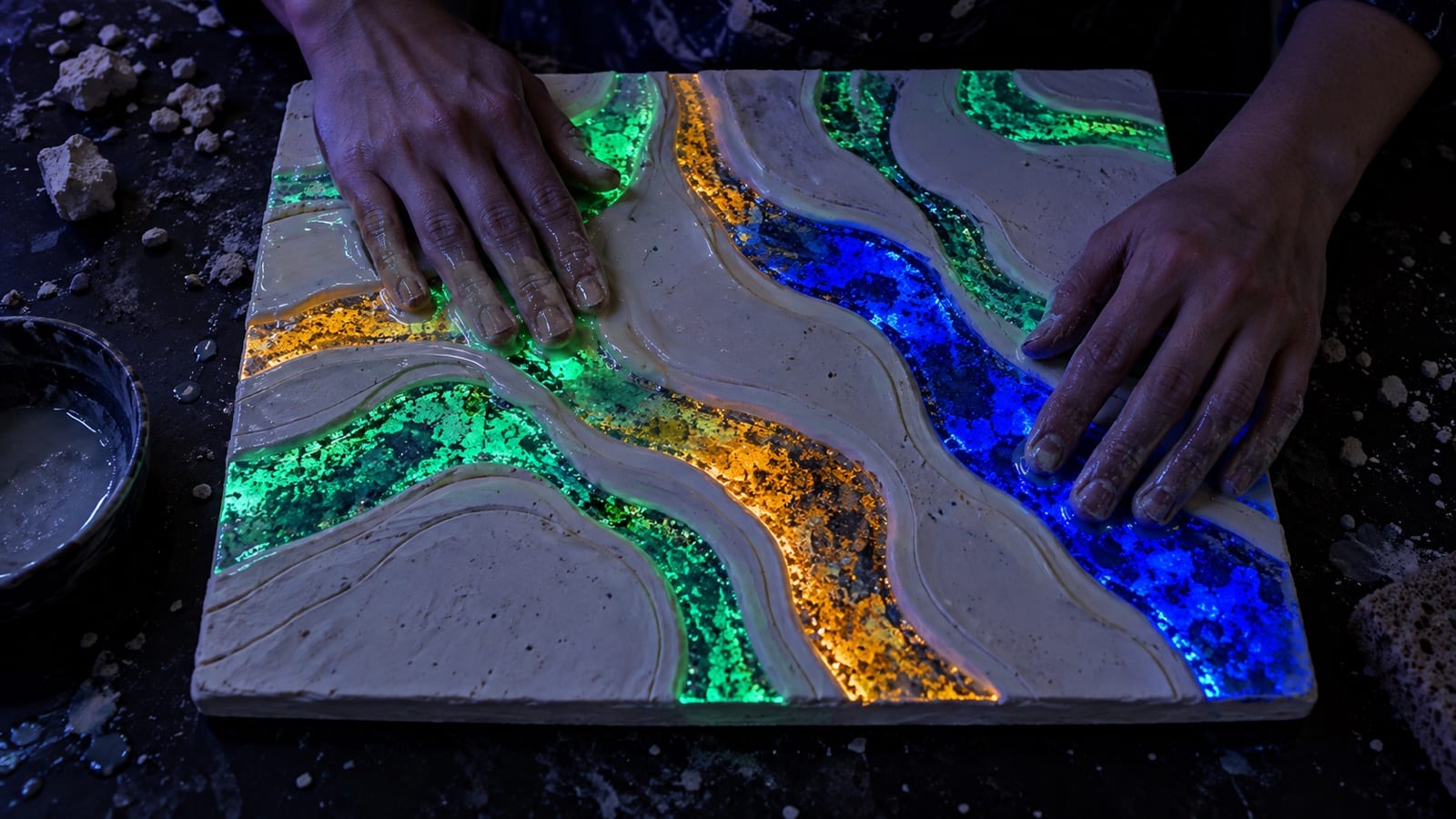
Hands pressing a plaster tile inlaid with fluorescent mineral and pigment channels, lime, amber and deep blue emission in the grooves, the plaster itself pale and dimsetup50mm
Translucent flowers on dark water under ultraviolet, pollen glowing amber and lime, petal veins faintly cyan, droplets catching the lightsetup50mm
A road bicycle hung against black, its frame seams, cable guides and bar tape fluorescing orange and green while the metal stays darksetup50mm
Citrus slices, seaweed and capsules on black under ultraviolet, each emitting its own colour: coral, yellow, cyan and magentasetup50mm
Rolling
Take it to set: all 151 briefs as one PDF · $8
LOC

Locations

04
A blacked-out studio with UV lampsA material or colour research labA mineral or natural history collectionA dark sports court or club space lit with UV
REF

Explore the aesthetic

Style guideColor palette
DOC

About this brief

How do I photograph the Fluorescence aesthetic?

Keep the room dark and let the material answer the ultraviolet.

Darkness first. Only materials that genuinely fluoresce should be bright, and each should stay tied to its surface, seam, particle or organism. Two or three emission colours per frame, strongly separated, never a rainbow. No neon tubes, no glowing sea creatures, no cyberpunk city, no stock lab vials, no purple haze, no glow effects on type, and never a figure without a head.

Director's note

What shots should I get for a Fluorescence photo shoot?

Leave with every frame on this list.

Shot list

  1. A designer in a dark studio beside a transparent coat on a dress form, fluorescent painted lines and motifs glowing lime, amber and cyan under ultraviolet while the room stays near-black
  2. Hands pressing a plaster tile inlaid with fluorescent mineral and pigment channels, lime, amber and deep blue emission in the grooves, the plaster itself pale and dim
  3. Translucent flowers on dark water under ultraviolet, pollen glowing amber and lime, petal veins faintly cyan, droplets catching the light
  4. A road bicycle hung against black, its frame seams, cable guides and bar tape fluorescing orange and green while the metal stays dark
  5. Citrus slices, seaweed and capsules on black under ultraviolet, each emitting its own colour: coral, yellow, cyan and magenta
What lighting works for Fluorescence photography?

Filtered ultraviolet (blacklight) in a dark room, placed low and to the side so emission reveals texture; no ambient fill. Expose for the brightest emission, keep reflected violet down, and use a UV-blocking filter on the lens so only visible fluorescence reaches the sensor.

Light

Where should I shoot Fluorescence photography?

Scout these before anything else.

Locations

  1. A blacked-out studio with UV lamps
  2. A material or colour research lab
  3. A mineral or natural history collection
  4. A dark sports court or club space lit with UV
What wardrobe works for Fluorescence photography?

Dark, non-reactive base clothing so only chosen elements respond: a treated textile, a painted seam, a reactive lace. Avoid white cotton with optical brighteners unless it is meant to glow, and avoid logos, which often fluoresce. Every figure whole, face included.

Wardrobe

Omoro Studio · Creative System

Generate shoot references in the Fluorescence style

Omoro reads your visual references and generates images in your exact aesthetic. Build a mood board before the shoot or create composite references for your client.

Join the waitlist