

OmoroShoot briefRoll 020Ser.05
Artisanal Textile aesthetic photography reference
RecTC 00:00:00:00

Artisanal Textile

Make the cloth the subject: weave, stitch, dye and repair, photographed at arm's length in daylight

Roll 0205 frames0 / 5 shot
Frames00/05
artisanal textile
SET

The setup

Shoot briefHD[artisanal text]00:00:00:00Stop ■
Brief Int(artisanal-te.BRF)

Artisanal Textile

01 LightDaylight only, raking across the cloth so the weave and the stitch cast their own shadows. A window and a white card. Never flat frontal light, which erases texture, and never a warm gel, which fakes it.
02 WardrobeLinen, hand-woven wool and cotton in undyed flax, indigo, walnut and madder. Plain silhouettes: a smock, a straight coat, a wide trouser. The cloth carries the interest, so no ornament, no jewellery, no layering that hides the surface.
03 LocationA weaving room with a loom
04 Palette
DIR

Director's note

The material is the subject and the silhouette is the frame around it. Name every technique accurately, and use only what the garment actually carries: boro, kantha, sashiko and patchwork are specific things, not moods. Never invent a provenance, and never combine motifs from unrelated traditions as decoration. Let the irregularity be real: uneven dye, a wavering stitch line, a repair that shows. A texture that is perfect everywhere is a digital one.

All 151 director’s notes, printable: Director’s Briefs, $8
VF

Viewfinder

Live

Four controls on the brief's own plate · the meter is real, so you can blow a frame

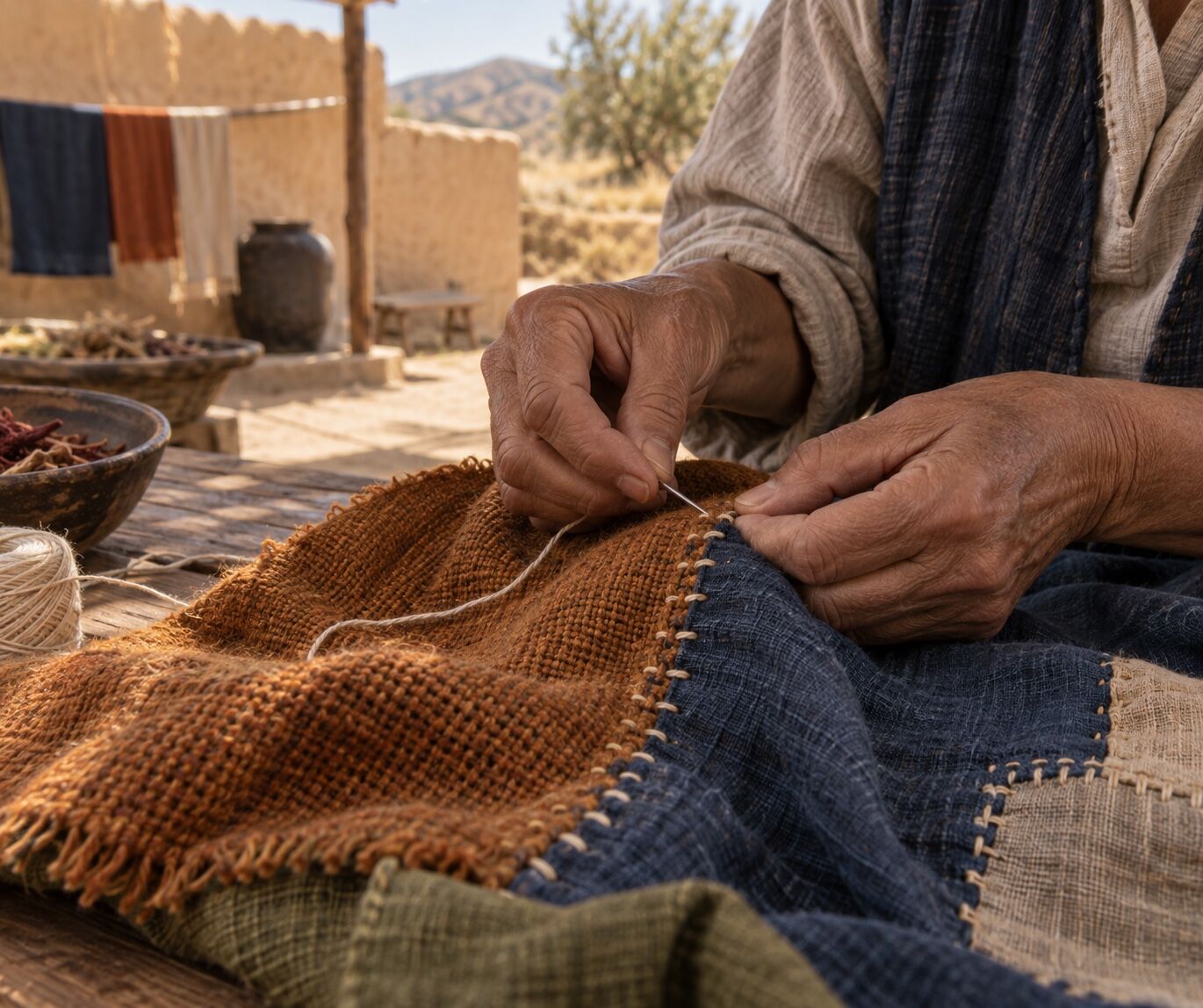
Artisanal Textile reference frame
Standby50mmMeteredf/5.6 · 1/125 · ISO 400

Running the list sets the camera for every shot in turn. Load your own photo to light and expose a frame you actually shot.

LGT

Light the set

3 lamps

Drag a lamp and watch the frame above change. The brief's own note is the preset

KeyThe light that makes the pictureSoft, farEye level
FillHow far into shadow you can seeHard, closeEye level
BackRound at the front, where it is just another fillOffEye level
On the brief
CS

Contact sheet

00 / 12

Nothing on the sheet yet. Set the camera, then take a frame.

SEQ

Shot list

00 / 05

Tap a pad to mark the frame shot · saved on this device

Full-length shot of a figure at a window in a plain hand-loomed linen smock, the silhouette simple enough that the slub and the drape of the cloth carry the picturesetup50mmthru glass
Waist-up shot showing a patched shoulder where three indigo cottons of different ages meet, running stitch crossing all three, the joins deliberate rather than scatteredsetup50mm
Close construction detail of a hand-stitched seam and a visible repair, the thread sitting proud of the cloth, raking daylight so each stitch casts a shadowdetail100mm
Close textile detail of an irregular hand-loomed weave with uneven dye take-up across the width, held flat, filling the framedetail100mm
Campaign scene in a weaving room or dye yard with a loom, hanging skeins and a wooden table, one figure working, daylight from a high windowenvironment35mmthru glass
Rolling
Take it to set: all 151 briefs as one PDF · $8
LOC

Locations

04
A weaving room with a loomA dye yard with hanging skeinsA plain table by a high windowA workshop with cloth folded on shelves
REF

Explore the aesthetic

Style guideColor palette
DOC

About this brief

How do I photograph the Artisanal Textile aesthetic?

Make the cloth the subject: weave, stitch, dye and repair, photographed at arm's length in daylight.

The material is the subject and the silhouette is the frame around it. Name every technique accurately, and use only what the garment actually carries: boro, kantha, sashiko and patchwork are specific things, not moods. Never invent a provenance, and never combine motifs from unrelated traditions as decoration. Let the irregularity be real: uneven dye, a wavering stitch line, a repair that shows. A texture that is perfect everywhere is a digital one.

Director's note

What shots should I get for a Artisanal Textile photo shoot?

Leave with every frame on this list.

Shot list

  1. Full-length shot of a figure at a window in a plain hand-loomed linen smock, the silhouette simple enough that the slub and the drape of the cloth carry the picture
  2. Waist-up shot showing a patched shoulder where three indigo cottons of different ages meet, running stitch crossing all three, the joins deliberate rather than scattered
  3. Close construction detail of a hand-stitched seam and a visible repair, the thread sitting proud of the cloth, raking daylight so each stitch casts a shadow
  4. Close textile detail of an irregular hand-loomed weave with uneven dye take-up across the width, held flat, filling the frame
  5. Campaign scene in a weaving room or dye yard with a loom, hanging skeins and a wooden table, one figure working, daylight from a high window
What lighting works for Artisanal Textile photography?

Daylight only, raking across the cloth so the weave and the stitch cast their own shadows. A window and a white card. Never flat frontal light, which erases texture, and never a warm gel, which fakes it.

Light

Where should I shoot Artisanal Textile photography?

Scout these before anything else.

Locations

  1. A weaving room with a loom
  2. A dye yard with hanging skeins
  3. A plain table by a high window
  4. A workshop with cloth folded on shelves
What wardrobe works for Artisanal Textile photography?

Linen, hand-woven wool and cotton in undyed flax, indigo, walnut and madder. Plain silhouettes: a smock, a straight coat, a wide trouser. The cloth carries the interest, so no ornament, no jewellery, no layering that hides the surface.

Wardrobe

Omoro Studio · Creative System

Generate shoot references in the Artisanal Textile style

Omoro reads your visual references and generates images in your exact aesthetic. Build a mood board before the shoot or create composite references for your client.

Join the waitlist